
Night diving in the caribbean transforms familiar reefs into a completely different world, where octopus hunt across the sand and bioluminescence sparks in your wake. This guide covers gear specs, certification standards, site conditions, and safety margins so you can plan a confident, well-prepared after-dark dive.
Why Night Diving in the Caribbean Rewards the Prepared
Night diving in the caribbean rewards the prepared diver with sightings that daytime hours simply cannot deliver, and PADI estimates that roughly 60 percent of reef creatures are nocturnal or crepuscular. The reef after sunset is not the same reef you memorized at noon. Corals extend their polyps to feed, hunting behavior replaces grazing, and the animals that hide from predators during the day come out in force.
The Caribbean is an unusually forgiving place to learn this skill. Water temperatures hold between 26 and 29 degrees Celsius for most of the year, so a 3 mm or 5 mm wetsuit covers most divers comfortably. Visibility often stays above 20 meters even after dark, and many sites sit within a short swim of shore or a five-minute boat ride. Those conditions lower task loading, which matters enormously when your hands are full of torch and your eyes are adjusting to a narrow beam.
What changes is your sensory budget. You lose peripheral vision, color fades to blue-green beyond your light, and your depth perception flattens. A good dive computer becomes your primary reference rather than your eyes, and buoyancy control becomes the skill that separates a calm dive from a silty mess. The payoff is worth the adjustment: sleeping turtles wedged under ledges, squid pulsing through your torch beam, and the electric shimmer of ostracods during a summer night dive.
What Certification Do You Need Before Your First Night Dive
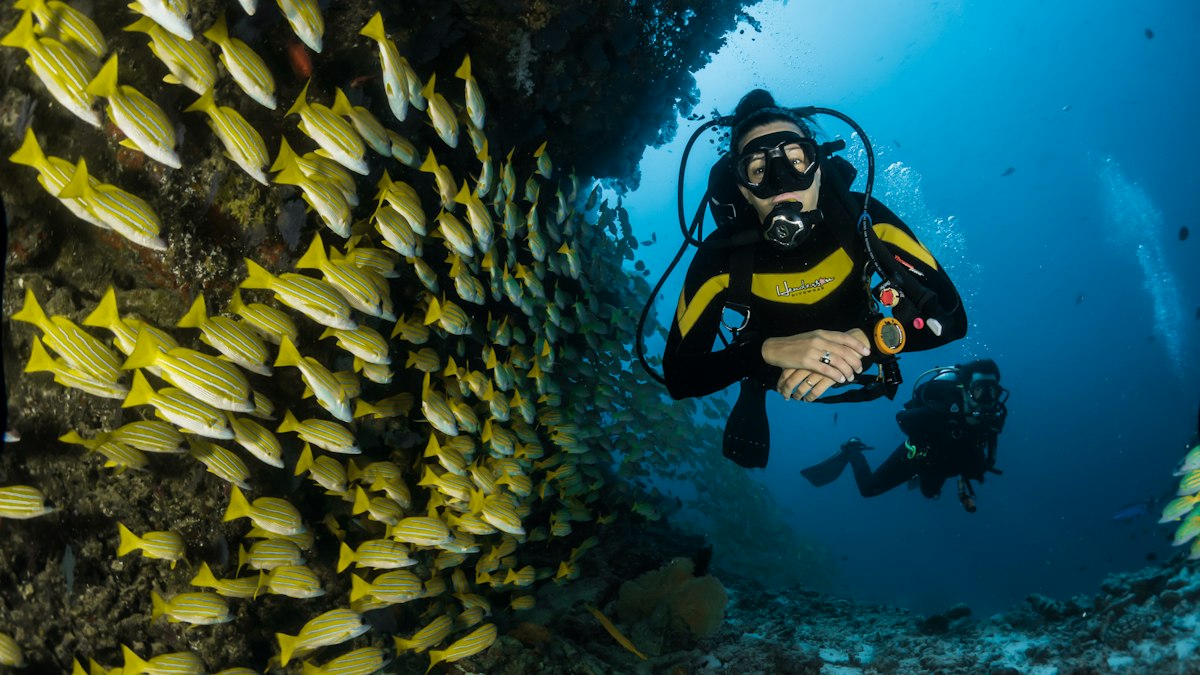
Certification requirements for night diving vary by agency, and PADI’s Night Diver Specialty requires just 10 logged dives as a prerequisite before you enroll. That low bar surprises many new divers, but the reasoning is sound. Night diving is less about raw experience than about comfort in the water, reliable buoyancy, and the discipline to stay with a buddy and a plan.
Most operators in the Caribbean will take you on a night dive as an Open Water diver if you go with a divemaster or instructor as part of a guided group. A dedicated specialty course typically runs two to three dives over one or two evenings and costs between 150 and 250 US dollars depending on the island and whether gear and torch rental are included. The PADI Night Diver Specialty Instructor Guide & Safety Protocols lays out the standard sequence: light handling, communication, navigation, and emergency procedures, all practiced in open water at night.
If you are certified through SSI, NAUI, or RAID, the equivalent specialty exists under a different name but covers the same ground. What matters is that your course includes actual night dives, not just a classroom session. Ask the shop how many open-water night dives are included and whether a torch is part of the package before you book.
Prerequisites and Logged Dive Minimums
Prerequisites and logged dive minimums deserve a direct question to your chosen operator, because standards differ more than the agency manuals suggest. Some Caribbean shops want 20 logged dives before they will take you on an unguided night shore dive. Others are comfortable with 10 if you have solid buoyancy and have dived the site before in daylight.
A sensible personal benchmark is this: you can hover motionless at 5 meters for a full minute, you can deploy a surface marker buoy without surfacing, and you can clear a flooded mask without panic. If any of those feel shaky, spend a few more daytime dives on skills first. Night diving amplifies small weaknesses, and a diver who kicks up silt in daylight will blanket an entire torch beam in darkness.
Night Diving Gear: Lights, Backup, and Redundancy
Night diving gear comes down to three lights and a plan, and DAN recommends every night diver carry a primary torch, a backup, and a tank light or marker. The primary light should throw a tight, bright beam of at least 500 to 1,000 lumens for reef work, with a narrow spot for signaling and a wider spill for navigation. A backup light belongs on your harness or in a pocket, not in your gear bag on the boat.
Your scuba cylinder gets a small glow stick or tank light so your buddy can find you in a crowd, and many operators require it. A surface marker buoy with a small light attached makes you visible to the boat during your safety stop, which is when most night diving incidents occur. Attach a small strobe or glow stick to the top of the buoy and deploy it before you ascend.
Electronics deserve special attention. Your dive computer needs a backlight you can trigger with one hand, and you should know the button sequence before you get wet. The Shearwater Peregrine is a popular choice for night work because its screen is readable in low light and its menus are simple to navigate with gloves on. Whatever computer you use, set your alarms for depth and time before the dive, not during it.
Torch Specs and Beam Choices That Actually Matter
Torch specs and beam choices matter more at night than any other gear decision, and a 1,000-lumen light with a focused 8-degree beam is a strong all-round starting point. Wider beams flood the scene and ruin your night vision; too narrow a beam and you cannot see your gauges or your buddy’s signals. Many experienced night divers carry a primary with an adjustable focus and a small wide-angle backup for close-up work.
Battery discipline is non-negotiable. Charge your primary before every night dive, carry spare batteries for the backup, and test both lights in the parking lot before you board the boat. A torch that dies at 15 meters turns a pleasant dive into a buddy-tow exercise. Fresh alkaline batteries in a backup light are a cheap insurance policy.
How Caribbean Night Dives Differ by Island and Site
Caribbean night dives differ enormously by island and site, and a shore dive in Bonaire looks nothing like a wall dive in the Cayman Islands. Bonaire’s house reefs are famous for night diving because you can walk in from the beach, follow a marked line, and be back at your rental truck within the hour. The reef slope starts shallow, which keeps your depth manageable and your navigation simple.
Curaçao offers similar shore access with more current on some sites, so check with the local shop about drift before you commit. Grand Cayman’s Kittiwake wreck and the shallower reef sites around Seven Mile Beach suit boat-based night dives with a divemaster who knows the mooring lines. Grenada’s overview of dive sites includes several reefs that work well after dark, particularly the shallower coral gardens around Dragon Bay.
Jamaica’s north coast has a strong night diving culture, and if you are planning a trip there, this checklist for night diving covers the local operator norms and shore-entry logistics. Wherever you go, ask two questions before booking: how far is the site from the boat or shore, and what is the typical current at night. A site that is calm at noon can pick up current after sunset.
Shore versus Boat Night Dives
Shore versus boat night dives present different risk profiles, and beginners usually do better from shore where entry and exit are predictable. A shore night dive means you kit up on land, walk in along a known path, and surface at a fixed exit point. The trade-off is a longer swim and more navigation, so a compass and a pre-dive briefing on the exit landmarks are essential.
Boat night dives cut the swim but add the complication of a moving platform, a mooring line, and other divers crowding the ladder. Listen carefully to the crew’s briefing on light signals and recall procedures. If the boat uses a strobe on the stern, note its position before you descend. On ascent, deploy your surface marker buoy, complete your safety stop at 5 meters, and surface close to the line rather than drifting into the channel.
Marine Life After Dark: What You Will Actually See
Marine life after dark shifts dramatically, and NOAA’s NOAA Coral Reef Conservation Program: Caribbean Nocturnal Ecology research documents how nocturnal fish and invertebrates dominate reef activity between dusk and dawn. Expect to see the reef’s night shift: squirrelfish and bigeyes emerging from crevices, lobster walking openly across sand, and octopus hunting with startling speed.
Coral spawning is a scheduled event on many Caribbean reefs, typically a few nights after the full moon in late summer. If your trip coincides with a spawning window, ask local guides whether night dives are running. Even outside spawning season, the variety is remarkable. Sleeping parrotfish in their mucus cocoons, brittle stars draped over sponges, and the occasional reef shark cruising the edge of your light all show up regularly.
Bioluminescence and biofluorescence add another layer. Ostracods, tiny crustaceans, produce flashes of blue light when disturbed, and some corals fluoresce under blue light with yellow filters. Many operators run dedicated fluorescence night dives for this reason. Bring a mask filter if you want to see it properly, and keep your torch off for a minute to let your eyes adapt.
Night Diving Safety: Protocols, Signals, and Emergency Plans
Night diving safety rests on a few hard rules, and the Divers Alert Network (DAN) Annual Diving Report: Nocturnal Dive Incidents shows that most night diving problems trace back to lost buddies, light failure, or navigation errors near the exit. The good news is that all three are preventable with simple habits.
First, agree on a lost-buddy procedure before you descend. The standard is to search for one minute, surface, and reunite at the boat or shore. Second, establish light signals: a slow sweep means look at me, a rapid wave means emergency, and a torch pointed at your own chest means I am low on gas. Third, plan your dive so you finish with at least 50 bar in your scuba cylinder and complete a full safety stop at 5 meters.
Carry dive insurance that covers night diving, and check the policy wording before you travel. A DAN dive insurance policy is the standard choice for recreational divers and covers chamber treatment and evacuation, which is exactly what you want if something goes wrong far from home.
Buoyancy Control and Silt Management at Night
Buoyancy control is the single biggest factor in whether your night dive is clear or cloudy, and a diver who contacts the reef even once can destroy visibility for the whole group. Silt kicked up at night hangs in the beam and reflects light back at you, turning a 20-meter viz dive into a 3-meter fog. Practice hovering with small fin movements and keep your dive fins angled up rather than down.
Trim matters too. A horizontal body position keeps your fins away from the substrate and reduces the chance of a fin strike on coral. If you are still working on trim, spend a daytime dive with an instructor before you book a night dive. The skills transfer directly, and your buddy will thank you.
Planning Costs and Logistics for a Caribbean Night Dive Trip
Planning costs and logistics for a Caribbean night dive trip is simpler than most divers expect, and a typical guided two-tank night boat dive runs between 90 and 140 US dollars per person. Shore dives are cheaper, often 30 to 60 dollars for a guided night dive or included in a multi-day package. Specialty certification adds 150 to 250 dollars on top.
Liveaboard trips offer the most night diving per dollar because most itineraries include at least two or three night dives per week. A seven-night Caribbean liveaboard typically costs between 2,000 and 3,500 dollars depending on cabin class and season, and that covers meals, tanks, and most dives. You can compare itineraries and book through a liveaboard booking platform to see which routes include night dives.
Gear rental is usually available, but torches are the one item worth bringing yourself. Rental lights are often underpowered and inconsistently maintained. Buy a reliable primary and a small backup, and you will use them on every trip for years.
Packing List for a Night Dive
Packing for a night dive is a short list, but every item earns its place. Bring these on every after-dark dive.
- Primary torch with fresh batteries, plus a spare set
- Backup torch on a harness or in a pocket
- Tank light or glow stick for buddy visibility
- Surface marker buoy with a small light or strobe
- Dive computer with a working backlight
- Dive fins with a comfortable foot pocket for precise kicks
- Light-colored or reflective hood or mask strap for visibility
- Whistle or signaling device for surface emergencies
Comparison Table: Day versus Night Diving Conditions
Day versus night diving conditions differ in ways that directly affect your planning, and this comparison table summarizes the practical differences. Use it to set expectations before your first night dive in the Caribbean.
| Factor | Day Dive | Night Dive |
|---|---|---|
| Typical visibility | 20 to 40 meters | 10 to 25 meters within torch beam |
| Primary navigation | Visual landmarks, sun position | Compass, pre-briefed line, dive computer |
| Marine life focus | Reef fish, corals, turtles | Octopus, lobster, squid, sleeping fish |
| Light source | Sunlight | Primary torch plus backup |
| Buddy protocol | Visual contact at distance | Close proximity, light signals |
| Ascent marking | Boat flag, natural reference | Surface marker buoy with light |
| Certification | Open Water | Night specialty or guided dive |
| Typical cost (guided) | 70 to 110 USD | 90 to 140 USD |
Common Mistakes That Ruin a Night Dive
Common mistakes that ruin a night dive are almost always avoidable, and the top three are over-lighting, poor buddy separation, and skipping the pre-dive briefing. Over-lighting is the most frequent. A torch pointed directly at a buddy’s face blinds them for minutes, and a beam swept across the reef scares off the animals you came to see.
Buddy separation happens when divers follow different animals and drift apart without checking in. Agree on a check-in interval, every two to three minutes, and use a light signal to confirm contact. If you lose your buddy, follow the one-minute search rule and surface.
Skipping the briefing is the quiet killer. Listen to the divemaster’s site description, note the exit point, and ask about current and boat traffic. If you are planning a broader trip that includes sharks, read this guide to shark diving for how night dives fit into predator encounters.
Light Discipline and Marine Life Etiquette
Light discipline and marine life etiquette go hand in hand, and the rule is simple: point your beam where you are looking, not where you are swimming. Sweeping your torch across the reef disrupts feeding and can trigger escape responses in shy species. Keep the beam low and steady, and use a red filter if your torch supports one to reduce disturbance.
Never touch or handle marine life, and never chase an animal to get a better photo. If a turtle is sleeping under a ledge, observe from a distance and move on. The reef at night is a working ecosystem, not a stage.
Key Takeaways
- Night diving in the caribbean is accessible to Open Water divers with 10 or more logged dives, ideally through a specialty course costing 150 to 250 USD.
- Carry a primary torch of 500 to 1,000 lumens, a backup, and a tank light, and test all three before every dive.
- Plan your dive around a 50-bar reserve, a full safety stop at 5 meters, and a surface marker buoy with a light for the ascent.
- Buoyancy control and trim protect visibility and the reef; practice both in daylight before your first night dive.
- Book guided night dives at 90 to 140 USD, or choose a liveaboard itinerary that includes multiple night dives per week.
- Check dive insurance coverage and carry a DAN policy before you travel.
Frequently Asked Questions
These frequently asked questions cover the practical concerns new night divers raise most often, from certification to marine life and safety margins.
Do I need a specialty certification to go night diving in the Caribbean?
Most Caribbean operators will take Open Water divers on guided night dives without a specialty card, but a Night Diver specialty adds real value. The course covers light handling, navigation, and emergency procedures across two or three dives, and it costs 150 to 250 USD. If you plan to dive independently at night, get certified.
What marine life will I see on a Caribbean night dive?
A Caribbean night dive reveals octopus, lobster, squid, sleeping parrotfish, and hunting squirrelfish, along with brittle stars and fluorescing corals. Reef sharks and turtles also appear regularly. Summer night dives after the full moon can coincide with coral spawning, which is one of the most spectacular events in the region.
How much does a guided night dive cost in the Caribbean?
Guided night boat dives typically cost 90 to 140 USD per person, while shore dives run 30 to 60 USD or are included in multi-day packages. Liveaboards offer the best value, with seven-night trips at 2,000 to 3,500 USD that include several night dives. Torch rental is often available but quality varies, so bringing your own is worth it.
What safety rules should I follow on a night dive?
Follow the one-minute lost-buddy search rule, surface if you cannot reunite, and complete a full safety stop at 5 meters with a surface marker buoy deployed. Keep at least 50 bar in reserve, agree on light signals before descending, and carry a backup torch. Check that your dive insurance covers night diving before you travel.
